House Clearance Crouch End — Health & Safety Policy
 This Health & Safety policy sets out the framework used by House Clearance Crouch End to manage risks associated with clearance, removal and waste handling operations. The policy applies to all staff, contractors and rubbish company service area activities carried out on clients' premises and in transit. Its purpose is to ensure work is conducted safely, consistently and in a way that protects people, property and the environment.
We commit to a systematic approach that integrates risk assessment, control measures, safe work practices and continuous review. All employees are expected to read, understand and follow this policy. Managers will ensure resources, training and supervision are in place so that both routine and non-routine jobs are completed without harm.
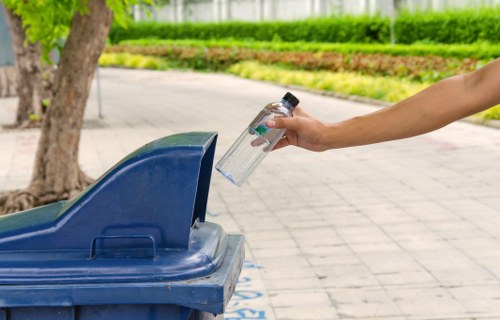 Scope: this policy covers general house clearance, bulky waste removal, recycling segregation, hazardous item identification and transport within our operational service area. It applies equally to one-off clearances, scheduled waste collections and ad hoc skip-loading where our teams represent the company on-site.
Responsibilities and Management Commitment
Senior management holds overall responsibility for health and safety policy implementation and will ensure documented risk assessments, method statements and safe systems of work are available for all activities in the rubbish removal and waste clearance service. Line managers are responsible for day-to-day enforcement, monitoring and reporting.
Employees must follow instructions, use provided personal protective equipment (PPE), report hazards immediately and participate in training. Contractors working within our rubbish collection service area are required to comply with our safety rules and provide proof of competence where requested.
Key responsibilities include:
- Carrying out pre-job risk assessments;
- Maintaining safe vehicles and equipment;
- Ensuring manual handling techniques and mechanical aids are used correctly;
- Segregating waste streams to avoid hazardous cross-contamination.
Risk Assessment and Control Measures
Risk assessments are completed before each job and are updated when site conditions change. Assessments consider manual handling, slips and trips, vehicle movements, working at height, hazardous substances, sharps, vermin and structural instability. Controls are selected according to hierarchy: elimination, substitution, engineering, administrative and PPE.
Safe systems of work include clear job briefs, buddy systems for heavy lifts, designated loading zones and vehicle exclusion areas where practical. Mechanical lifting aids are provided and maintained. Staff must not attempt lifts beyond their training or capacity; obtain assistance or use equipment.
 Hazardous items such as asbestos-containing materials, chemical containers, batteries and solvents are identified and handled with caution. Such items are separated, assessed under appropriate handling procedures and, where necessary, dealt with by licensed specialists. Our approach reduces risk to staff and the wider community in our rubbish collection territory.
Personal protective equipment is mandatory where risk controls cannot eliminate hazards. Typical PPE includes high-visibility clothing, gloves suited to task, safety boots, eye protection and hearing protection when required. PPE selection is part of the risk assessment and training explains correct fitting, use and inspection procedures.
Vehicle and traffic safety is essential when operating in residential and urban environments. Drivers must conduct pre-start checks, secure loads, use seat-belts and follow local traffic laws. When parking for collections, teams must assess pedestrian flow and use signage or cones to protect the working area.
Manual handling training is provided to all operatives; refresher sessions are scheduled. Training covers lifting techniques, team lifts, push/pull methods and the safe use of trolleys, ramps and tail-lifts. Records of training and competency are maintained.
Health surveillance is carried out where employees are exposed to specific risks such as dusts, biological agents or repetitive manual handling. First aid provision and emergency arrangements are documented and accessible on site. Staff are instructed in incident procedures including evacuation, first response and emergency contact protocols.
Incident reporting and investigation are integral to performance improvement. All injuries, near misses and dangerous occurrences must be reported immediately using company reporting systems. Investigations aim to identify root causes and implement corrective actions to avoid reoccurrence.
Contractor management requires that third parties demonstrate safe practice before work commences. This includes reviewing contractors' risk assessments and method statements for any subcontracted clearance or hazardous waste activity conducted within our rubbish company service area.
Monitoring and review ensure the policy remains effective and relevant. Regular site inspections, toolbox talks, audits and management reviews measure compliance and identify opportunities for improvement. Performance indicators include incident frequency, training uptake, audit findings and corrective action closure.
Communication is maintained through briefings, written procedures and accessible safety information. Staff are encouraged to raise concerns and suggest improvements; managers will consider suggestions and respond as part of continuous improvement.
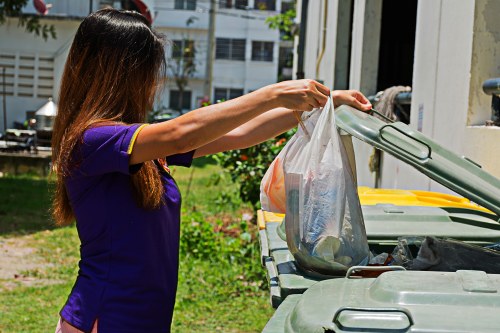 Compliance with relevant statutory duties and industry best practice is a baseline for our operations. This policy does not replace formal regulations but aligns company practice with them. Any legislative changes that affect clearance and waste handling are monitored and applied within our operational procedures.
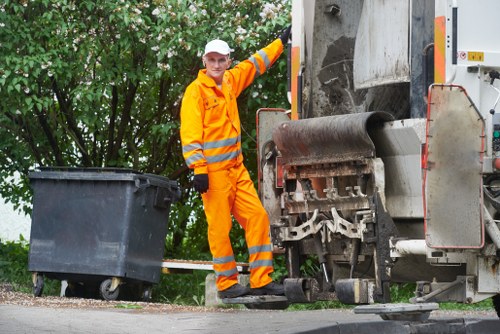 Enforcement and consequences: failure to comply with safety instructions or to use required controls may result in disciplinary action. Workers must prioritize safety above speed of job completion; rushing to finish tasks is explicitly discouraged as a risk factor.
Review cycle: this policy is reviewed at least annually or after significant incidents, changes in operations, or new regulatory requirements. Reviews may result in updated procedures, additional training or revised equipment standards to maintain safe operations across the rubbish removal and waste clearance service area.
Conclusion: Our Health & Safety policy provides a clear, enforceable framework to manage hazards associated with house clearance and waste services. Through training, risk assessment, communication and management commitment, House Clearance Crouch End aims to protect people, property and the environment while delivering reliable clearance services in our operational area.